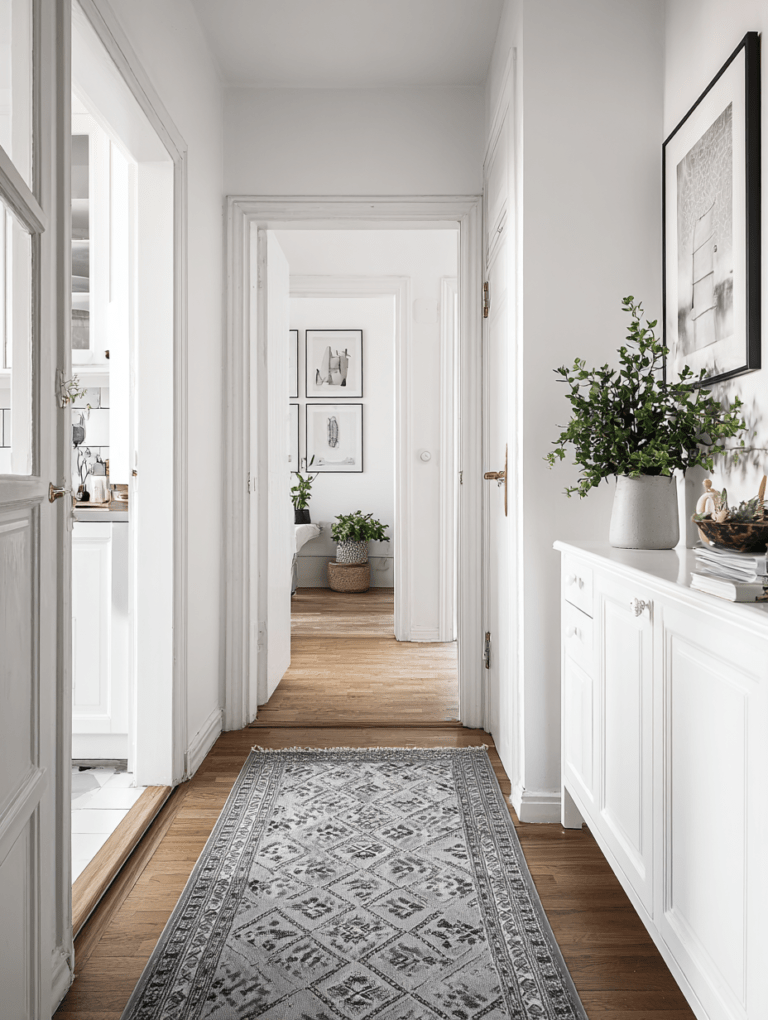
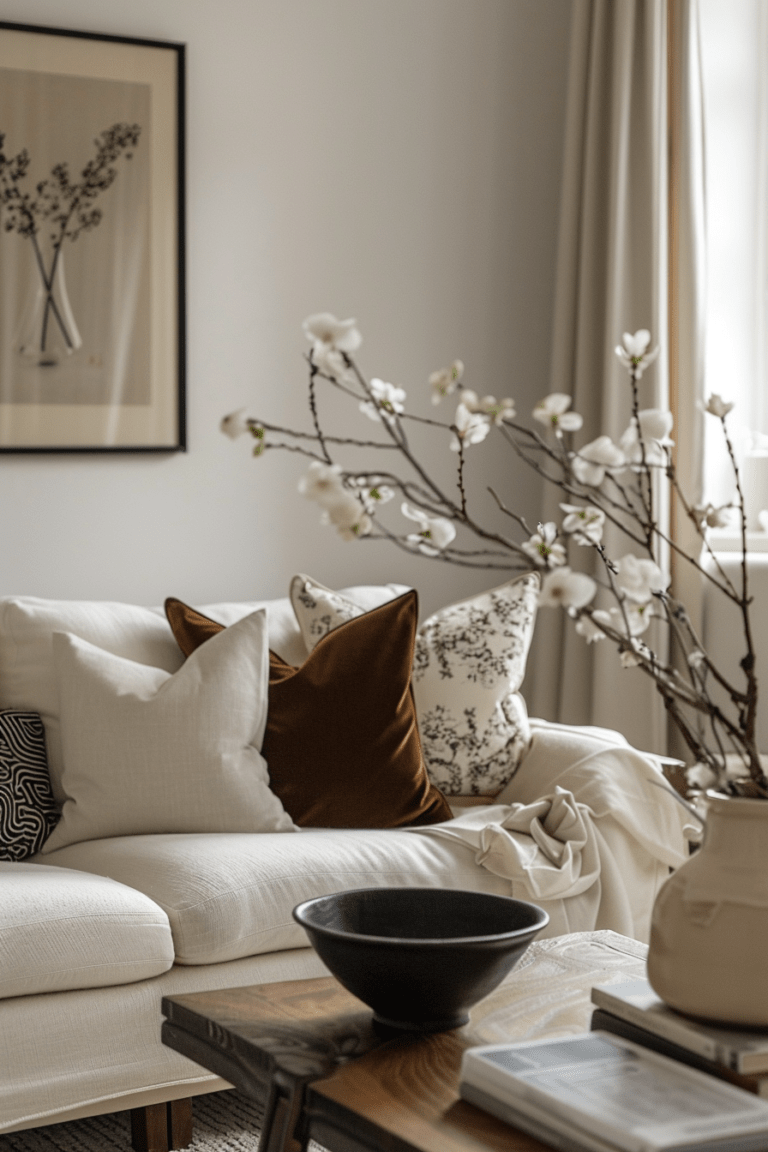
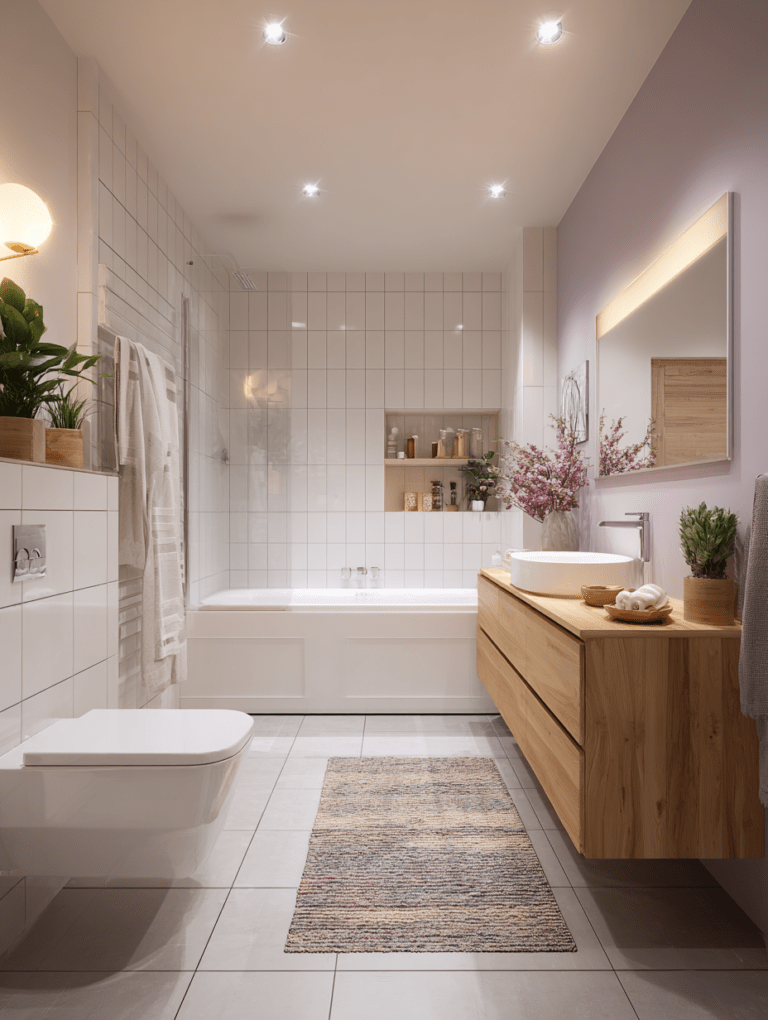
For years, interiors were dominated by gray, cool neutrals, and endless shades of beige. Safe, calm – sometimes a little too safe. Now color is making its way back into homes, and many people love the idea of it.
But actually committing to color is a different story. After all, interior choices aren’t temporary. You see them every day. And investing in something bold can feel risky if you’re not sure you’ll love it a year from now.
The good news: a colorful home doesn’t have to mean overwhelming walls or neon furniture. With the right approach, color feels warm, elegant, and surprisingly easy to live with. Here’s where we usually start.
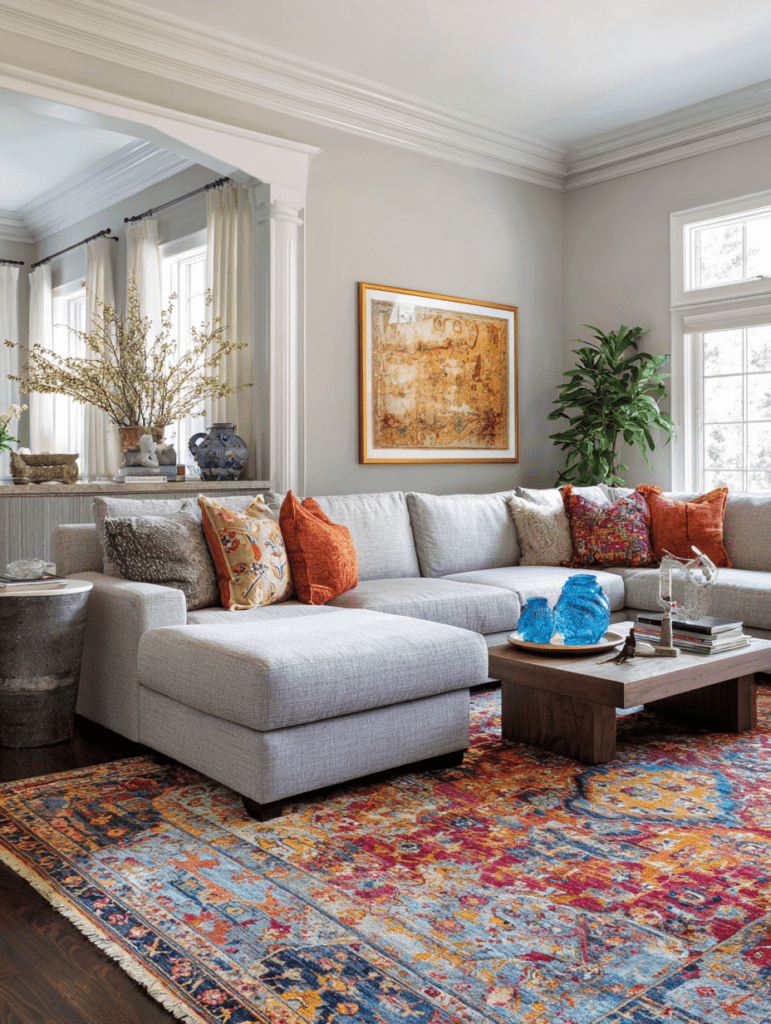
1. Know What Colors To Choose
Not every color works the same way in interiors. If you’re just getting comfortable with color, start with shades that already carry warmth and depth.
Terracotta, mustard yellow, forest green, deep blue, burgundy, even dark plum. These tones feel rich rather than loud, and they blend naturally with wood, linen, and other natural materials.
They bring life into your room without overwhelming it.
2. Keep the Big Pieces Neutral
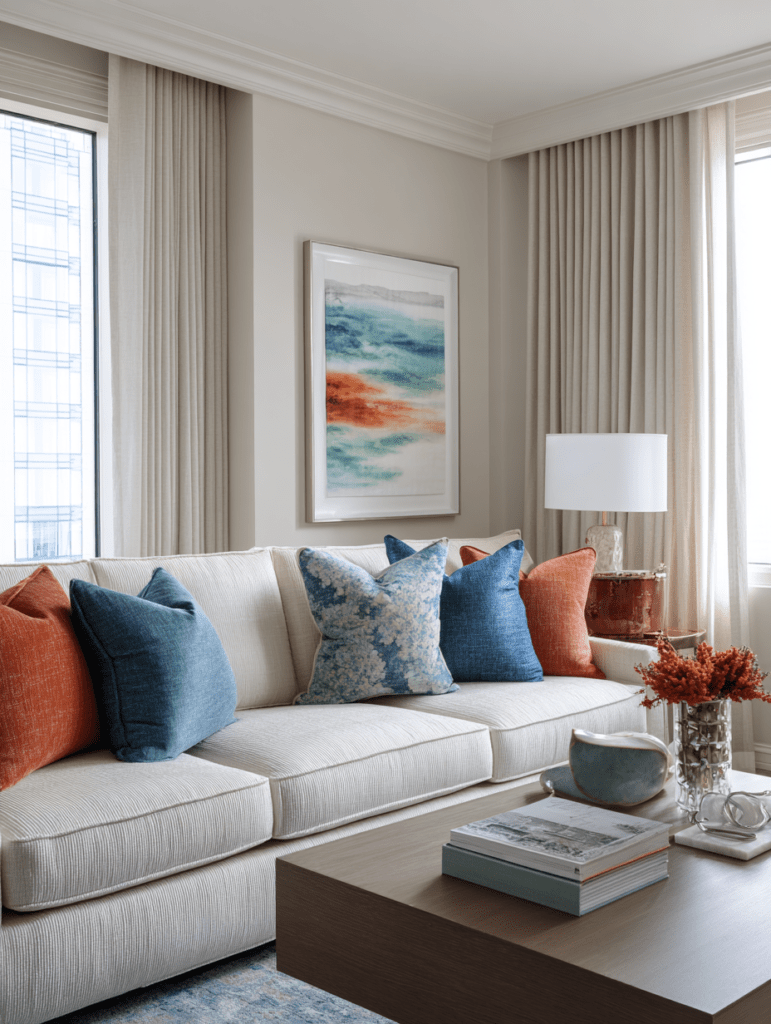
If color makes you nervous, don’t start with the biggest element in the room. A bright sofa, colorful kitchen cabinets, or bold built-ins are hard to ignore and even harder to change.
Instead, keep foundational pieces neutral: the sofa, large cabinets, or main rug. Once the base is calm, you can experiment freely with color around it.

This way the room stays balanced even if you decide to switch things later.
3. Use Color Where It Can Easily Change
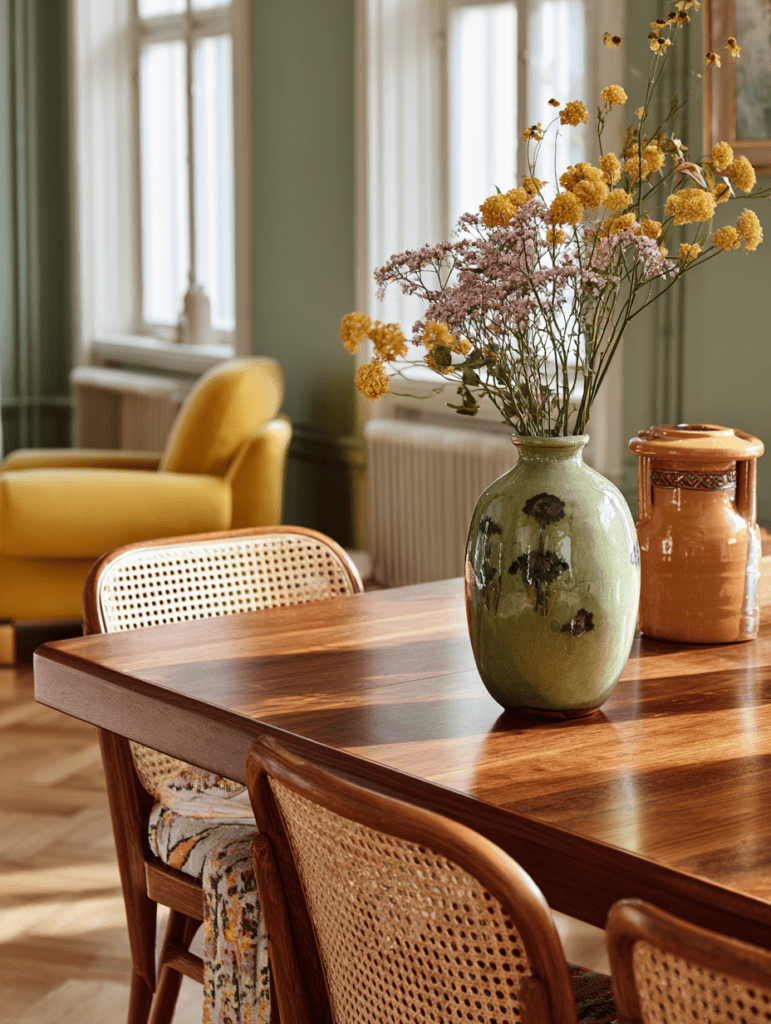
The safest way to introduce color is through pieces that aren’t permanent. Think cushions, throws, smaller rugs, artwork (like this one with delicate wildflowers*, decorative objects, or runners.
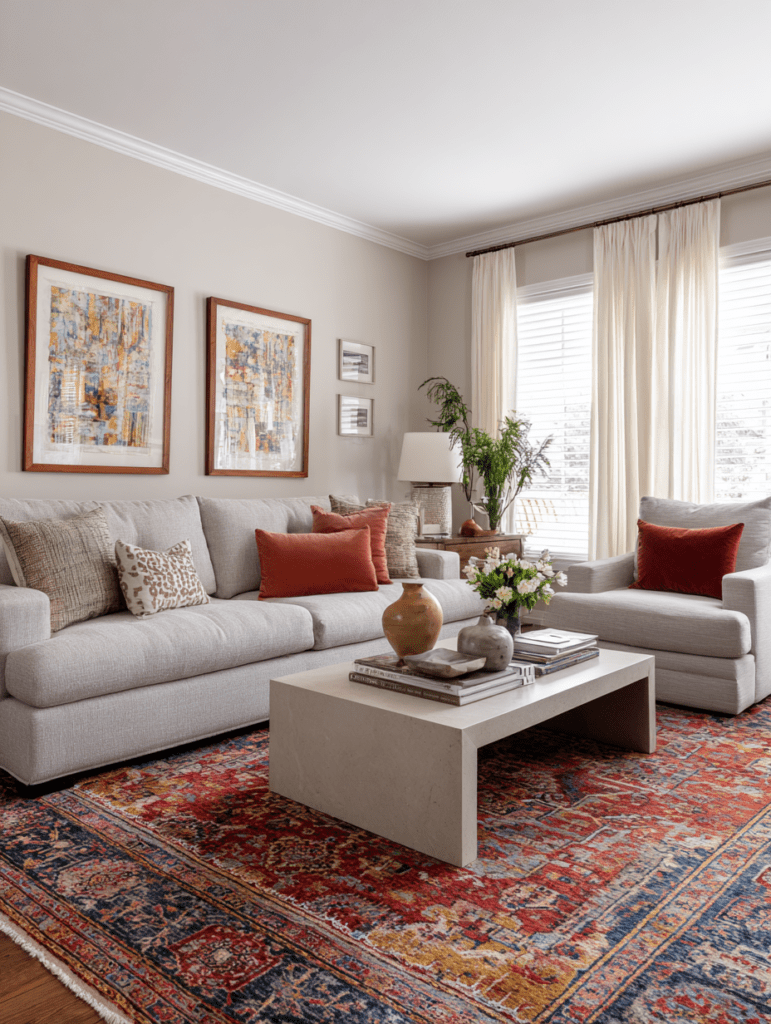
Decorative rugs* are especially powerful. A patterned or colorful rug instantly shifts the mood of a room, and many modern options are washable and easy to replace later.
Color should feel flexible, not permanent.
4. Start in Smaller Spaces
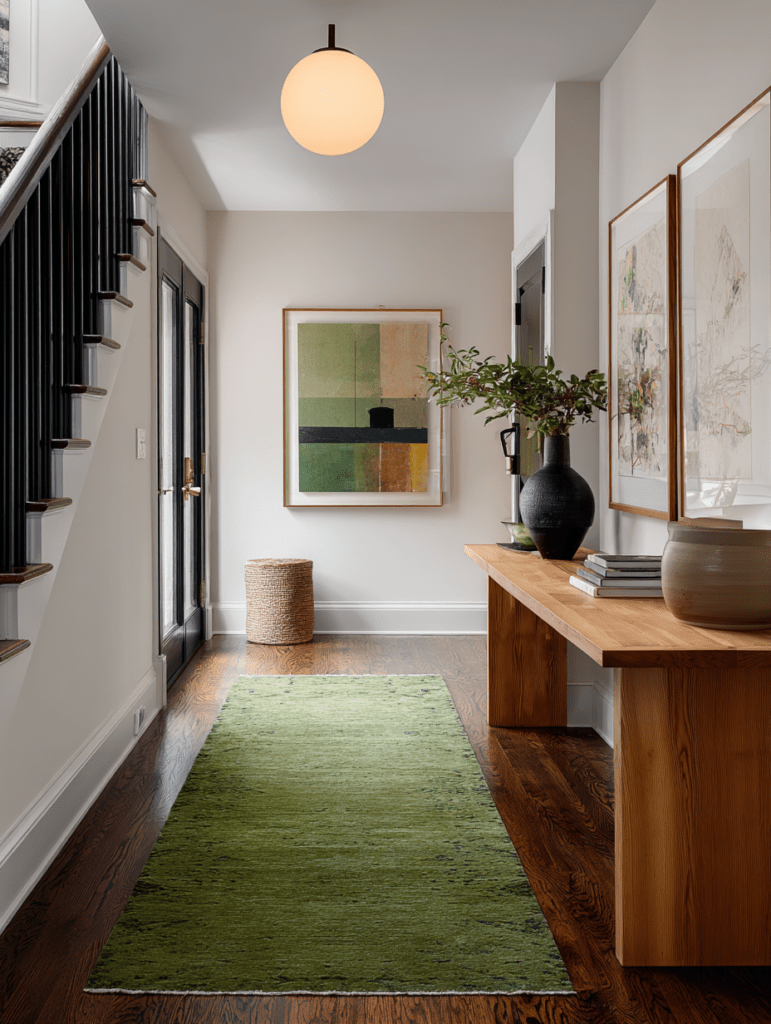
You don’t have to test color in the main living room immediately. Entryways, hallways, guest rooms, or even a bedroom are perfect places to experiment.
A colorful bedspread, a painted console table, or a bold runner in the entryway introduces personality without dominating the entire home.

Once you get used to seeing color every day, it starts to feel natural very quickly.
5. Balance Color With Natural Materials
Color feels calmer when it’s paired with materials that already bring warmth, like wood, linen, wool, stone. These textures soften stronger tones and keep the room from feeling too graphic.
For example, forest green next to walnut furniture feels elegant. Terracotta combined with linen and woven textures feels relaxed and warm.

Nature is often the best reference for balanced color combinations.
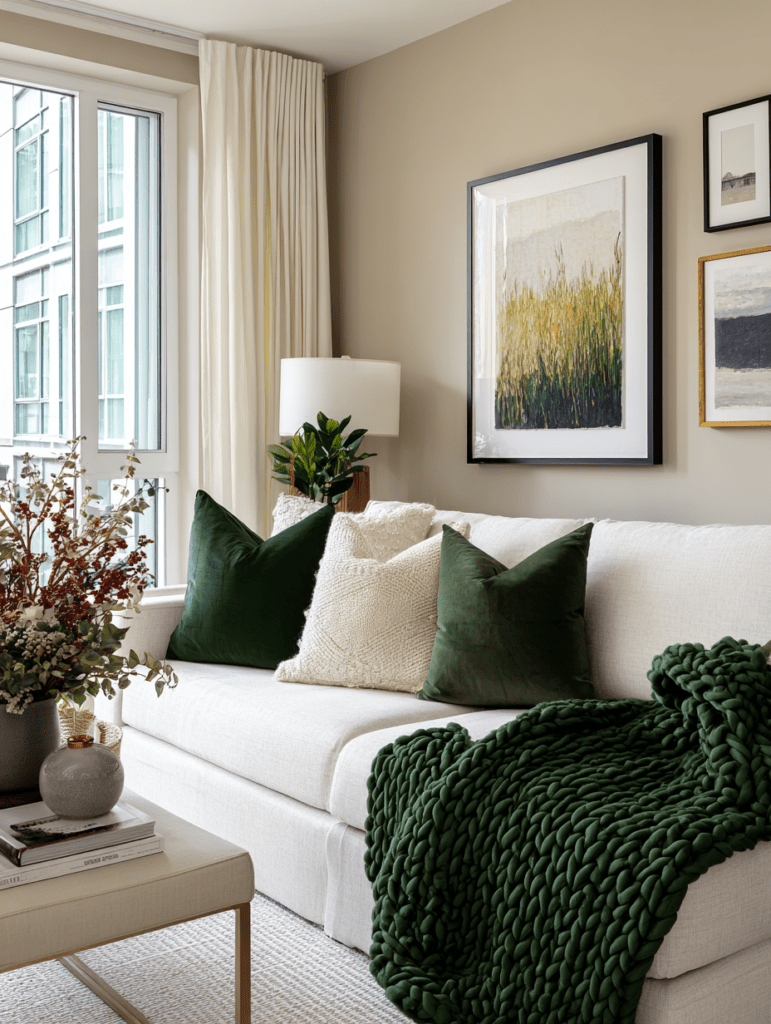
6. Let One Color Lead
One common mistake is introducing too many colors at once. Instead, pick one main tone and repeat it throughout the room in small ways.
A cushion, a vase, a rug detail, a piece of artwork. When a color appears in several places, it stops feeling random.
Consistency creates calm – even with color.
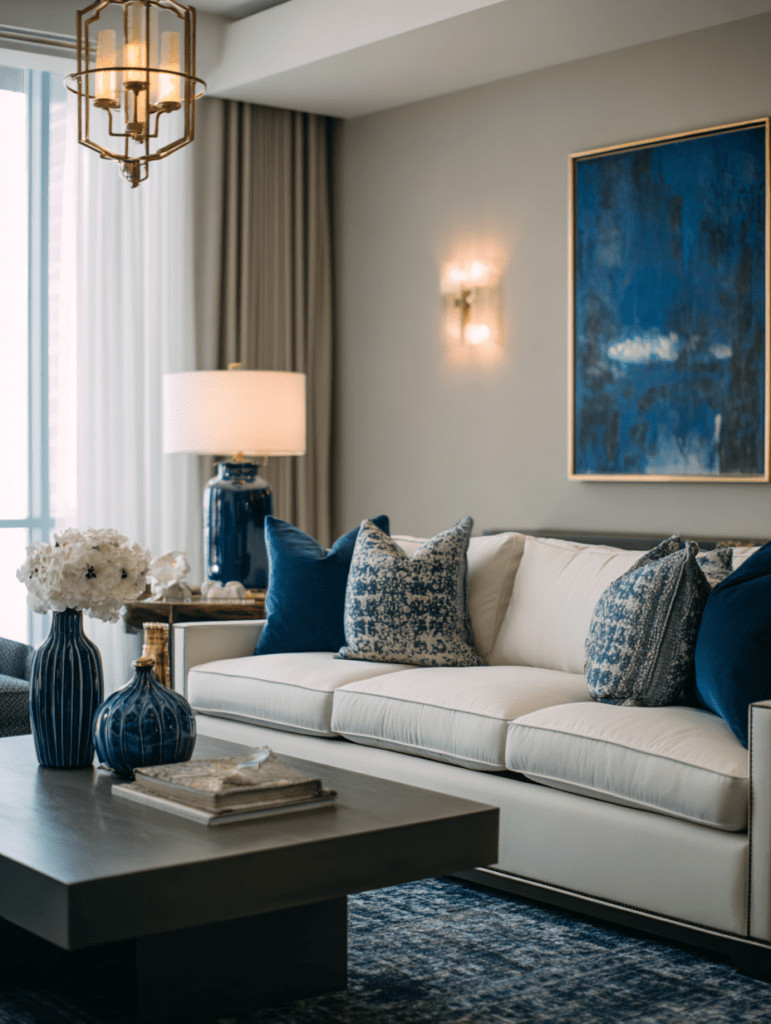
7. Remember: Color Should Make You Happy
At the end of the day, color isn’t about rules. It’s about mood. Some people feel calm in quiet neutrals, others feel energized by warmer tones.
If a certain shade makes the room feel more alive to you, that’s already a good sign. And because color can often live in textiles and accessories, you can always adjust over time.