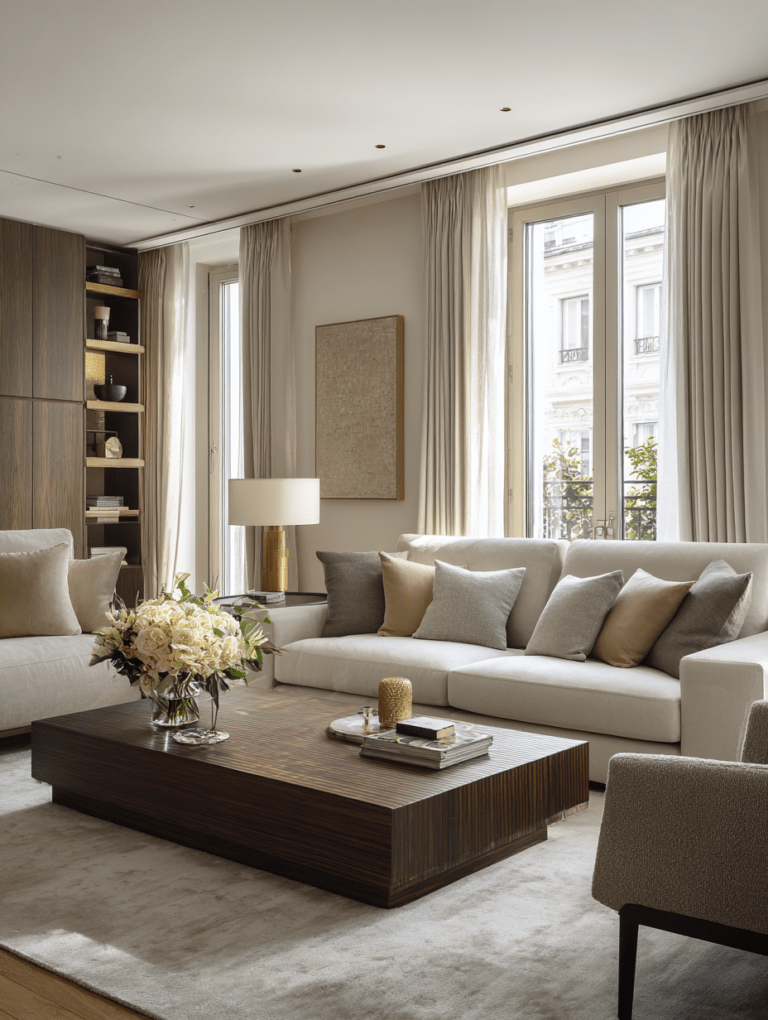
Minimalism doesn’t mean white walls and silence. And color doesn’t mean chaos.
This is why a colorful minimalist living room is about few pieces and clear lines, but bold color decisions that feel deliberate rather than decorative. The difference lies between filling the room with tones and choosing where color earns its place.
Here we’re breaking down 5 ways to design a living room that feels colorful and still minimal.
How to Combine Color and Minimalism
The common mistake is assuming minimalism equals neutrality (nothing against our beige-people). It doesn’t. Minimalism is about reduction, not restriction.
From an editorial perspective, three principles always guide the balance:
- Fewer elements, stronger impact: If the sofa is cobalt blue, let it stand alone. No competing accent colors.
- Structured palette: Two to three colors maximum. One dominant, one supporting, one grounding neutral.
- Clean silhouettes
Minimalism creates the framework. Color brings identity.
1. The Single Bold Sofa Approach
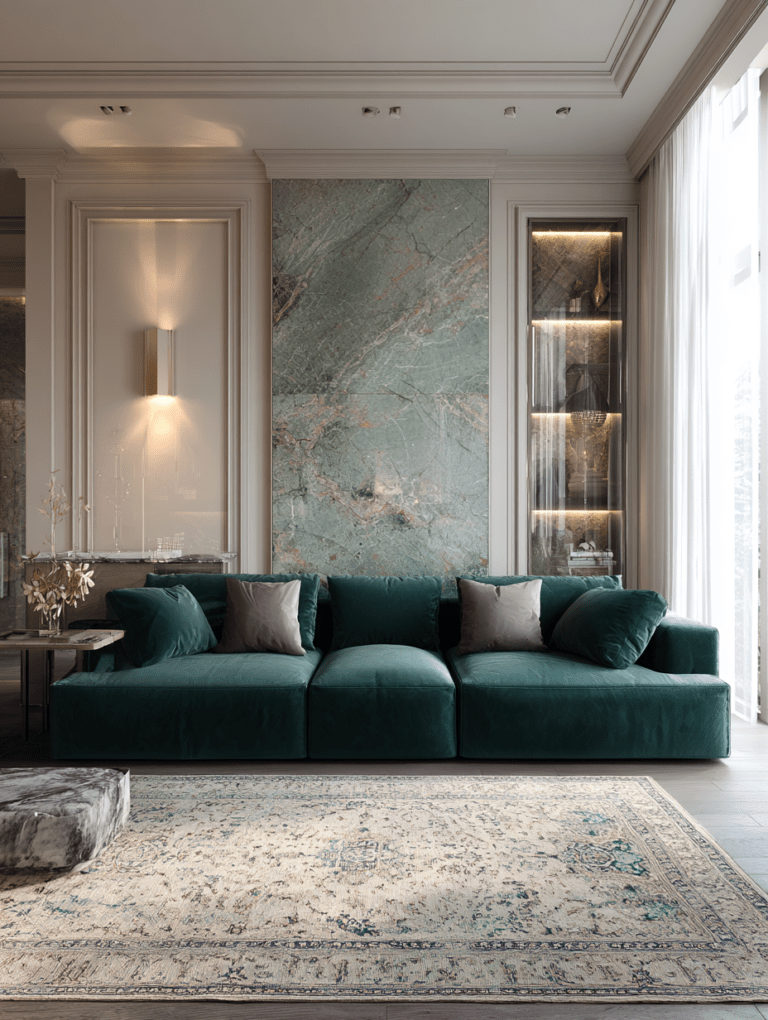
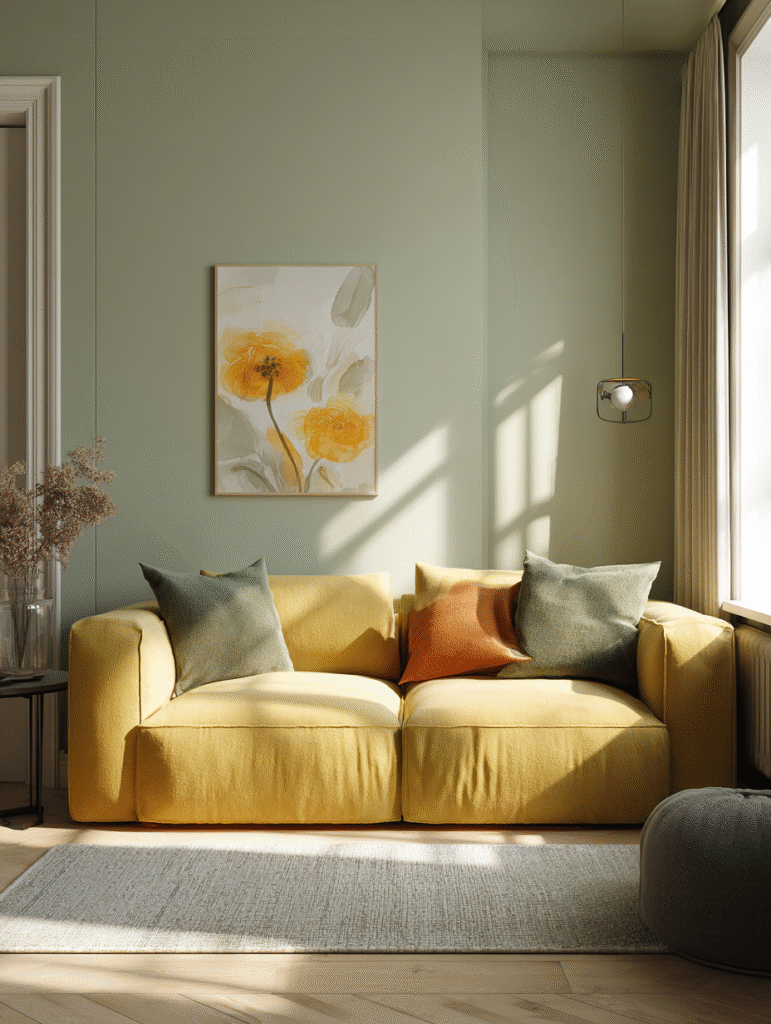
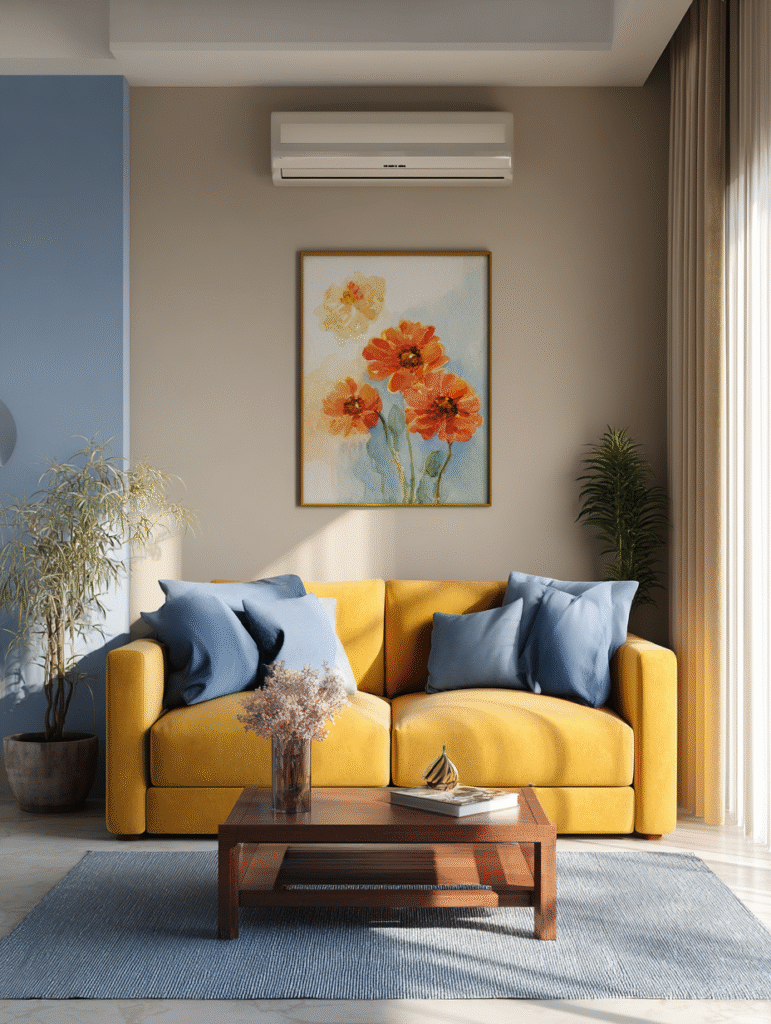
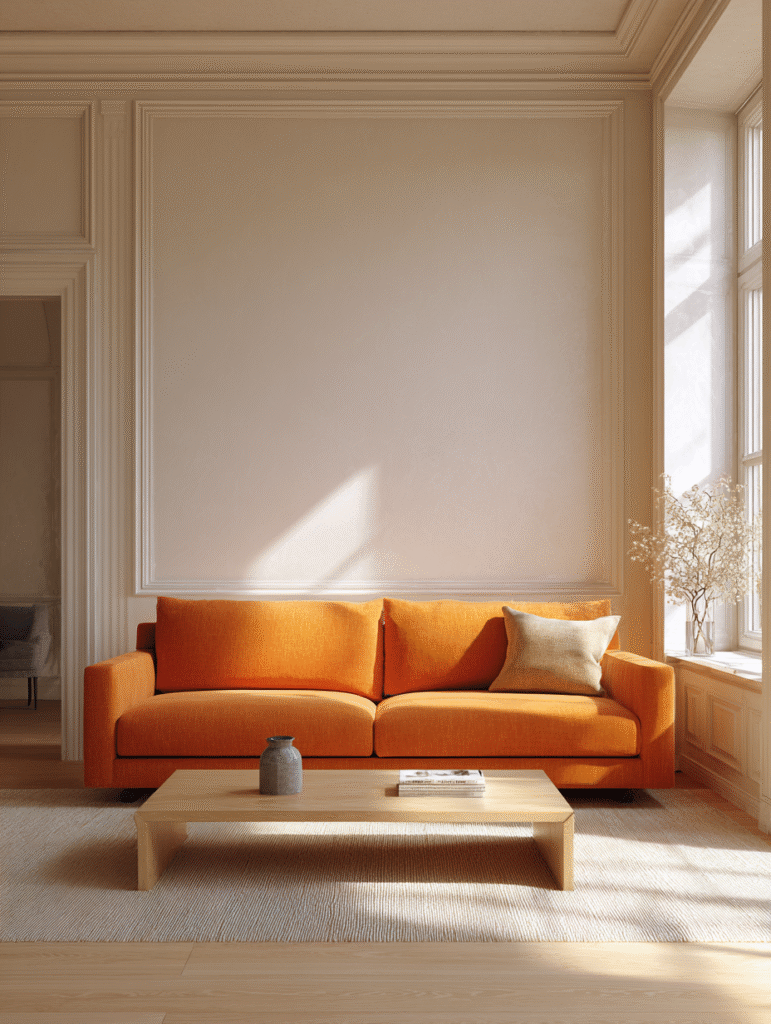
One saturated sofa* in an otherwise restrained space.
But the strength lies in what’s missing. No patterned cushions. No competing decor. Just a strong piece inside a calm frame.
2. Monochrome With a Twist
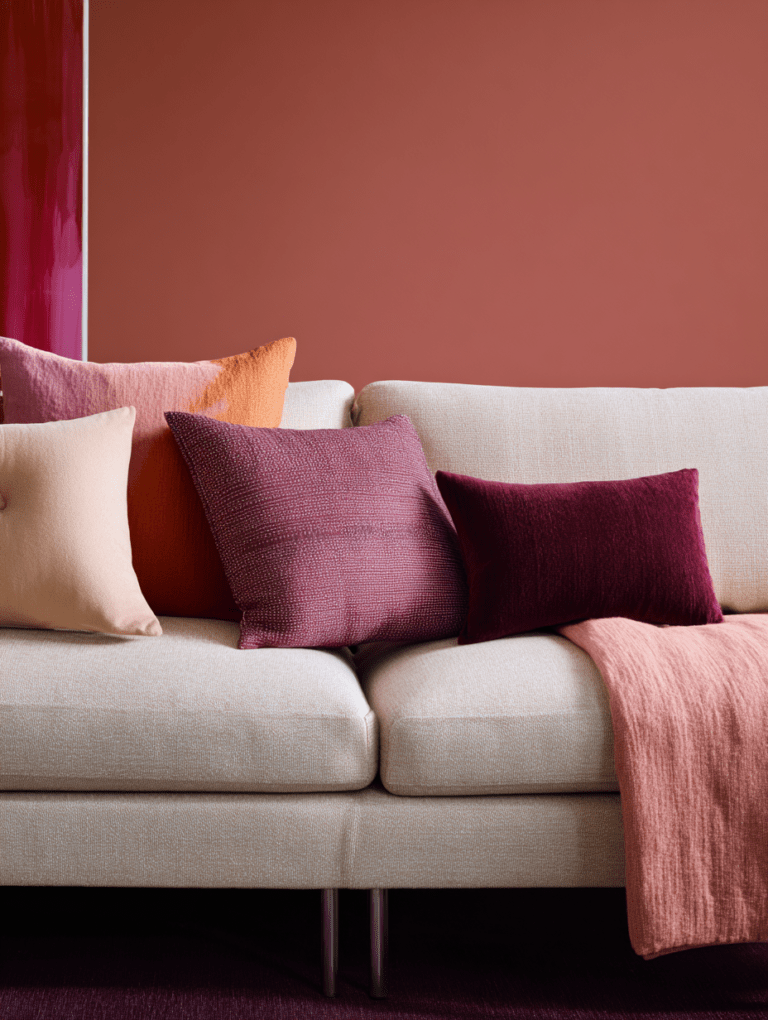
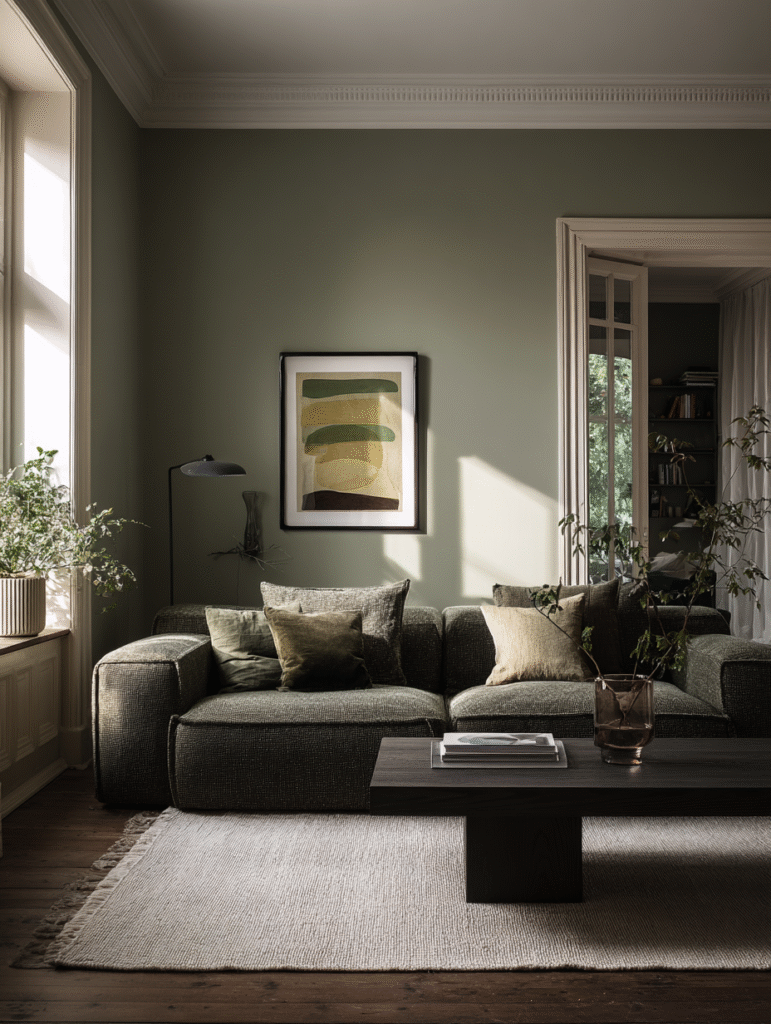
Minimalism naturally leans toward monochrome. Instead of mixing five colors, stay within one family and shift intensity.
A soft blush room with a deeper raspberry chair. Muted sage walls with a darker green sofa.

Layering tonal variations keeps the space disciplined and feels considered rather than decorative.
No visual noise. Just range.
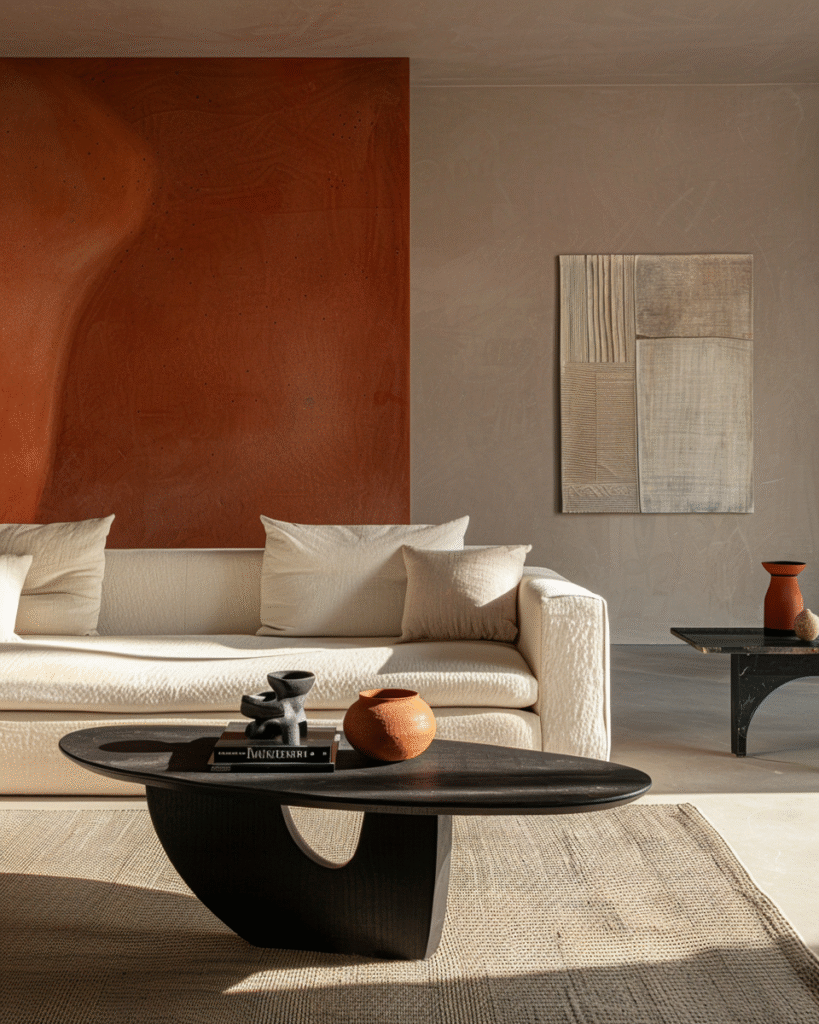
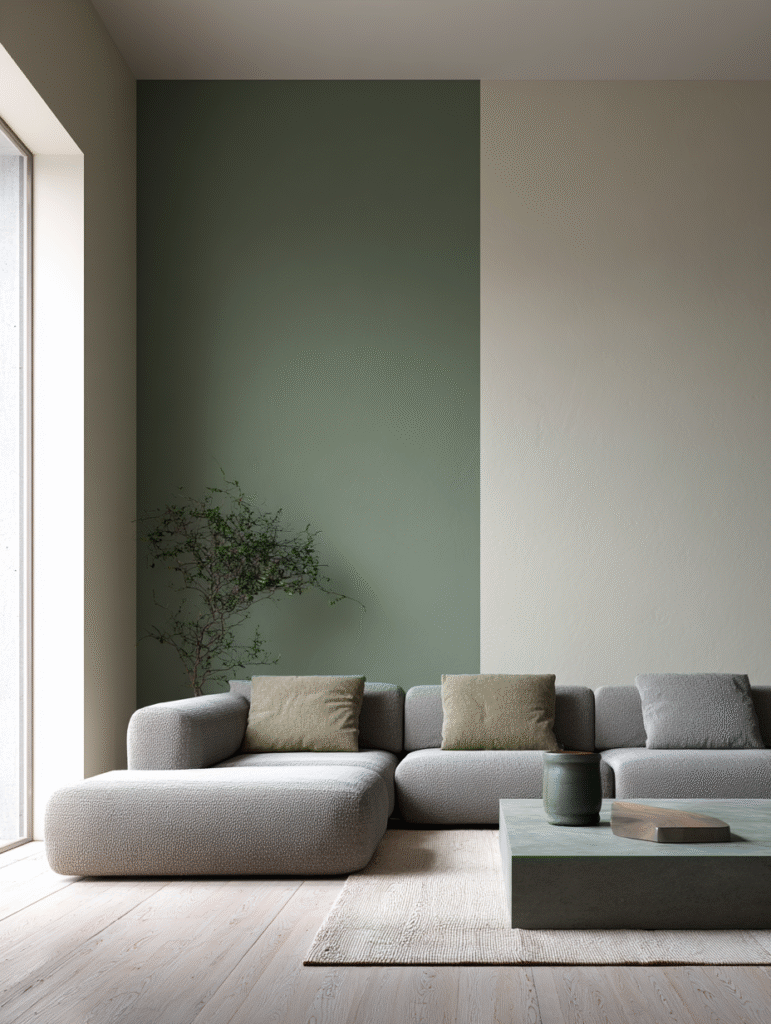
3. Color-Blocked Architecture
Instead of decorating with objects, introduce color structurally.
A single painted wall panel behind the sofa or a large geometric rug with defined color blocks make the atmosphere more colorful.
The furniture remains minimal. The color becomes part of the architecture rather than surface decoration. Therefore, it reads as confident, not playful.
Just take a look at these wall ideas for color blocking*.
4. Art as the Only Color Source
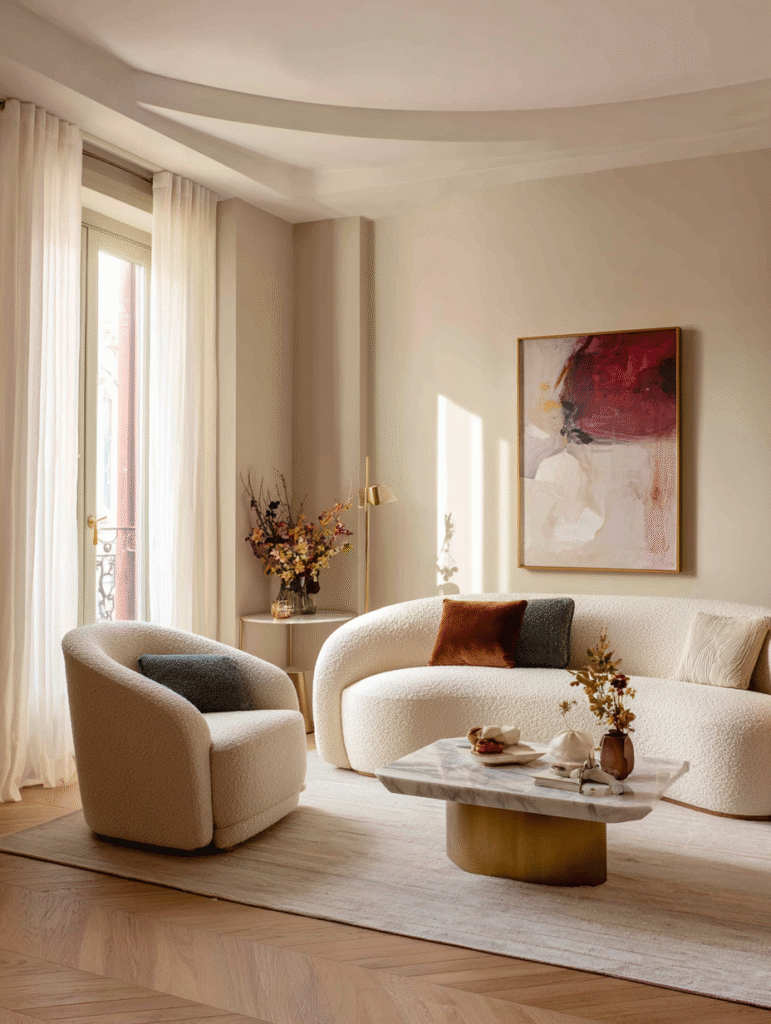
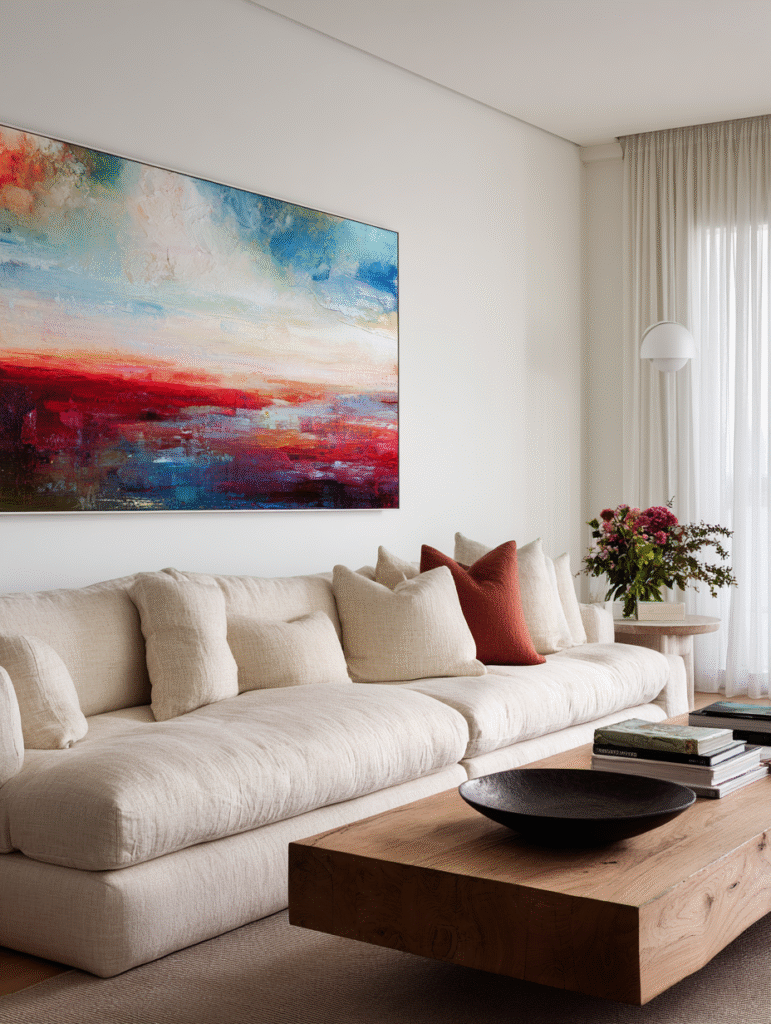
Sometimes the furniture stays neutral and the art carries the entire room.
A large-scale abstract painting with bold reds, blues, or yellows. Everything else pared back: linen sofa, simple wood table, no excess decor.

The artwork becomes the focal point without competing elements around it.
5. Sculptural Color Accents
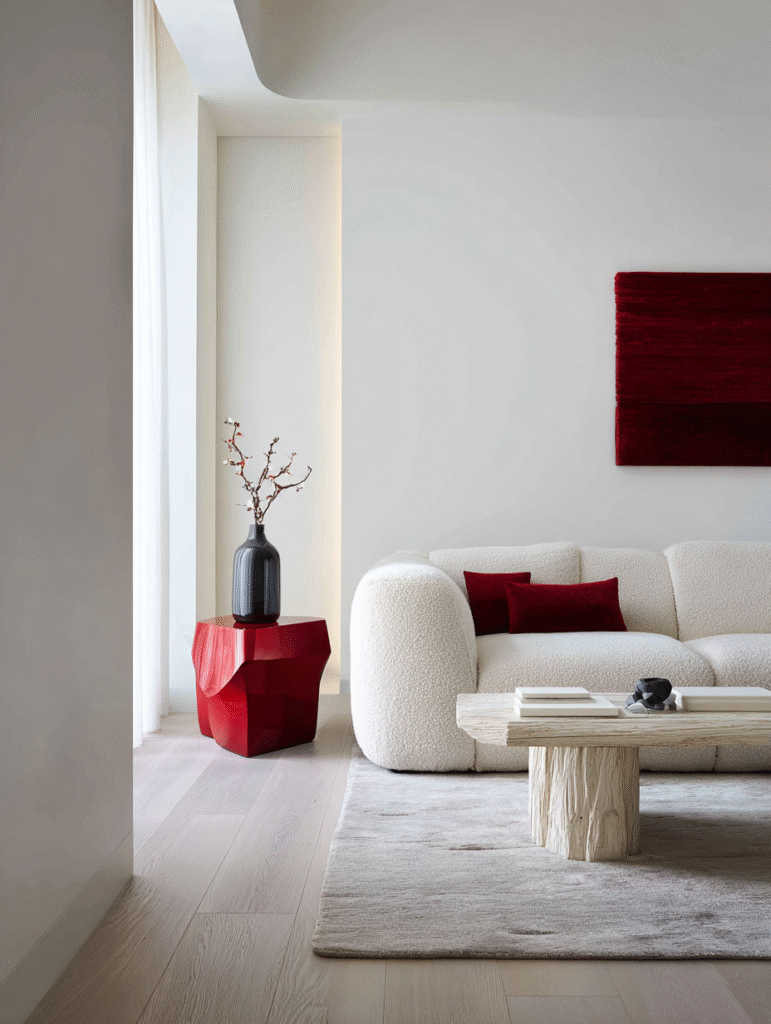
Color doesn’t always need a large surface. Sometimes it works best in sculptural form. A lacquered red side table*, a bright blue lounge chair* or a yellow floor lamp* with clean geometry.
Everything else stays disciplined. Negative space is preserved. The room breathes.
Colorful minimalism is about choosing rather than adding. Just let structure lead and place color intentionally. Suddenly you will find that your room is colorful but still remains clear and minimalist.