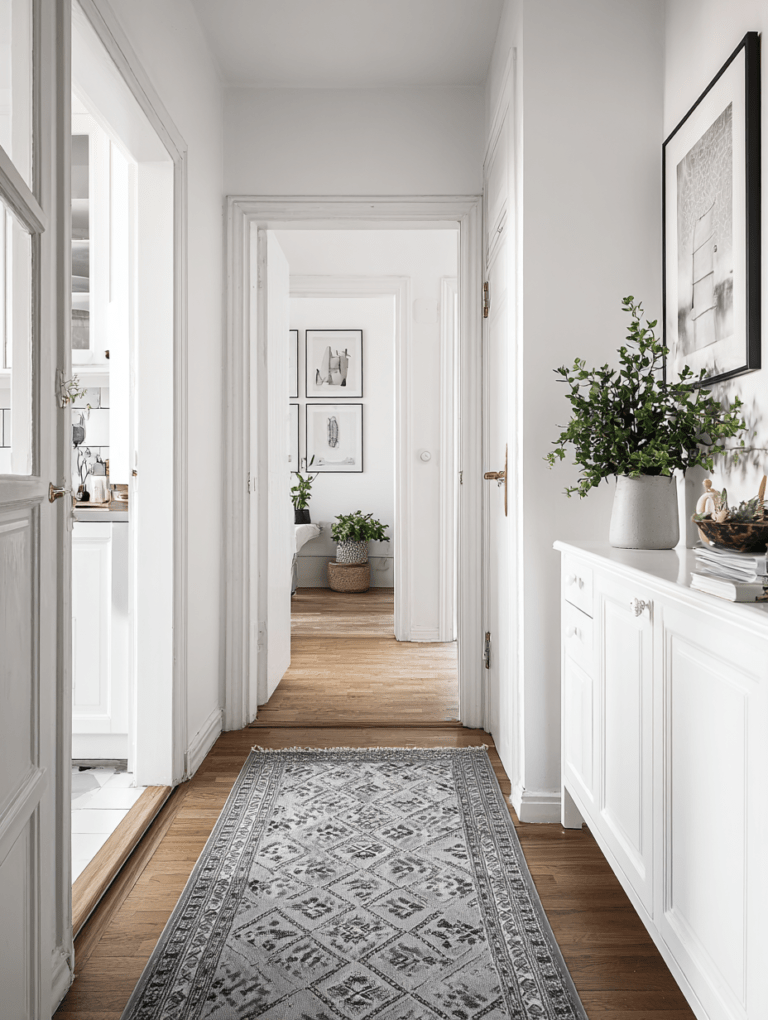
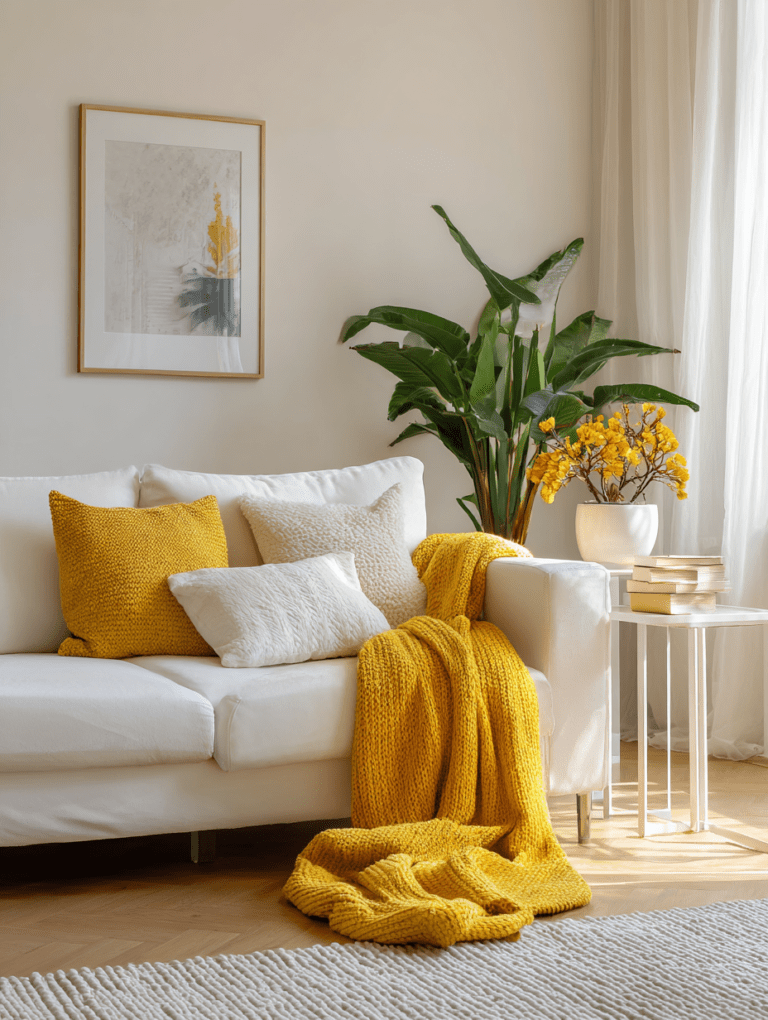
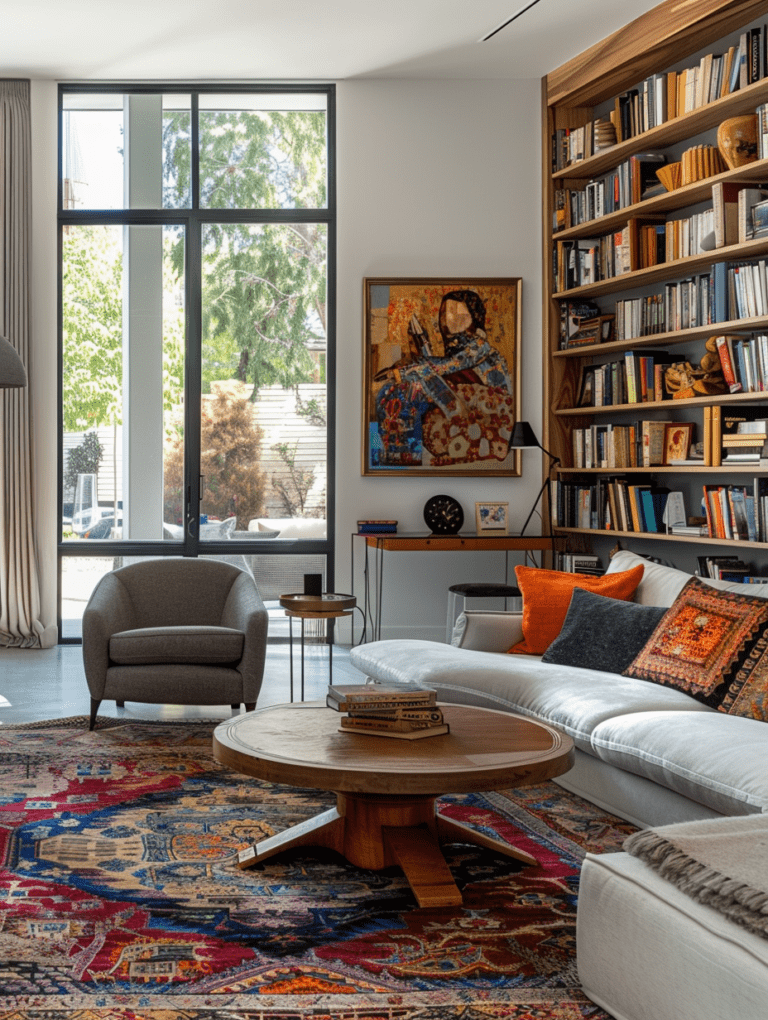
Beige sofas have ruled living rooms for years – understandable. They are safe, elegant, and easy to style. But they are also, for some homes, a little too polite. Too light, too predictable, sometimes even a little fragile in everyday life.
Lately we’ve noticed a shift. Designers and homeowners are quietly moving toward something deeper, richer, and far more forgiving: khaki. It carries the same versatility as beige, but with more depth due to the green undertones.
Here are our editors’ ideas for styling a khaki sofa in all kind of interior designs.
Why Khaki Often Works Better Than Beige
Beige sofas brighten a room, but they can also flatten it. In spaces with pale walls, light floors, and neutral décor, everything risks blending into one continuous tone.
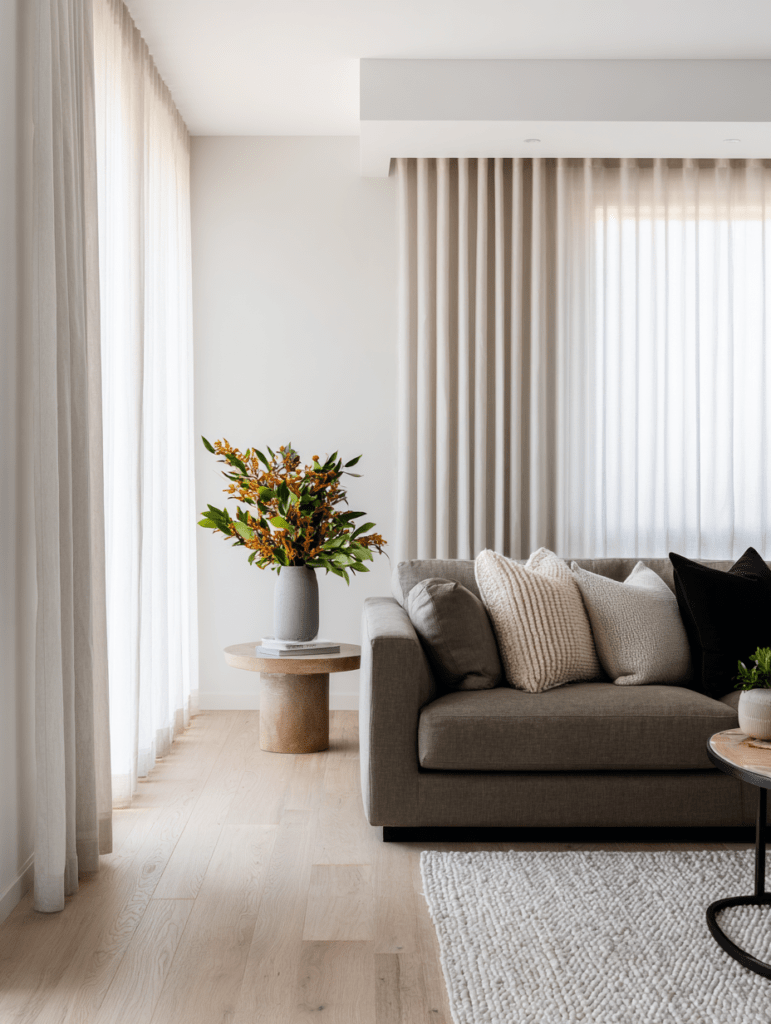
Khaki solves that problem almost instantly. It introduces depth without turning the sofa into a heavy statement piece. The color sits somewhere between olive, taupe, and muted green, which means it pairs beautifully with wood, brass, linen, stone, and even darker tones like black or espresso.
It is also far more forgiving in real life. Everyday use, pets, children, or simply living in the space becomes less stressful when the sofa isn’t the lightest element in the room.
In other words: khaki offers the elegance of a neutral, but with more personality.
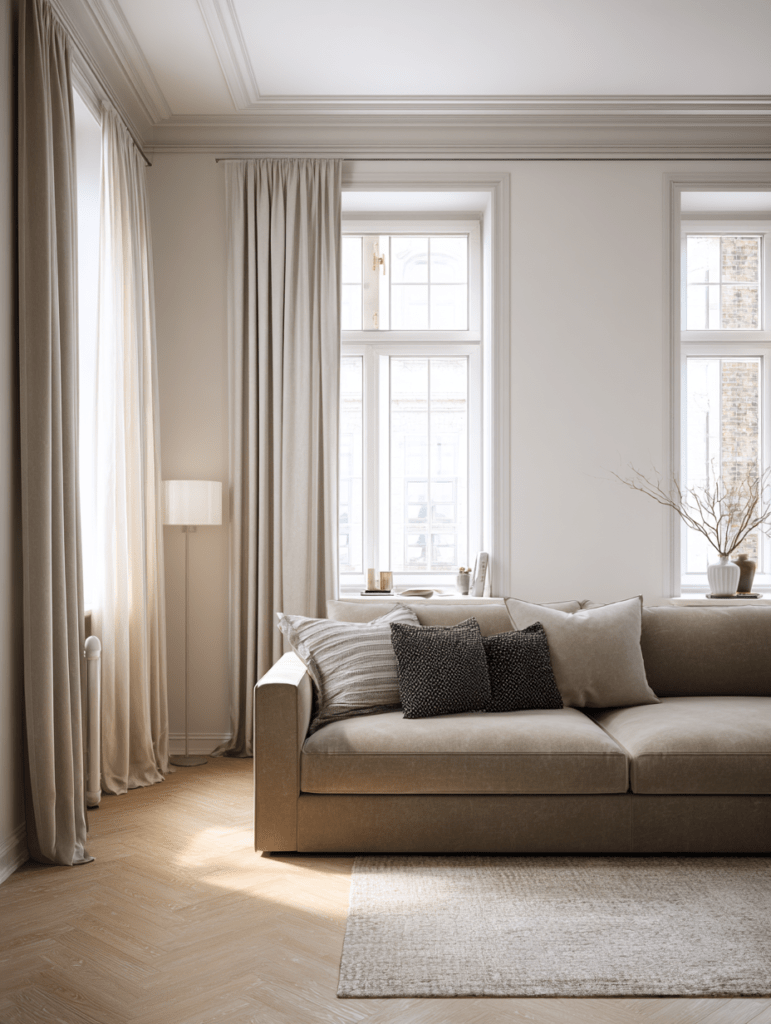
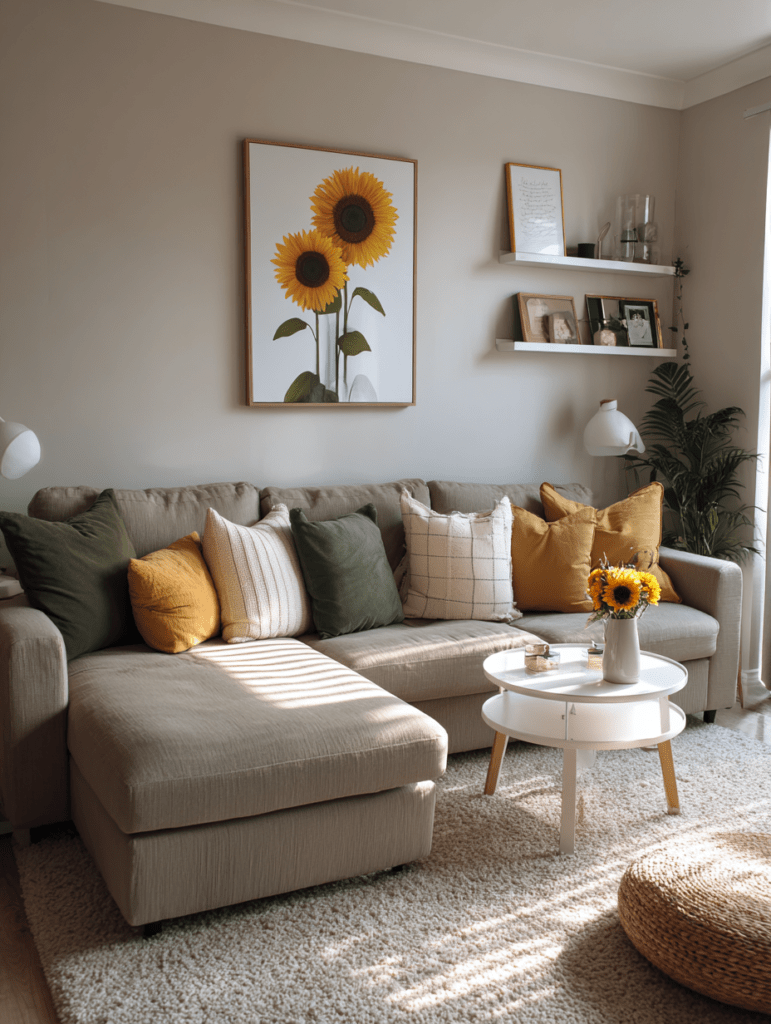
Khaki in a Soft Scandinavian Living Room
In lighter interiors, khaki becomes the grounding element that prevents the room from feeling washed out. Pair it with pale oak, linen curtains, and warm whites. The result still feels Scandinavian, but noticeably cozier.
The key here is contrast. Light woods and creamy walls allow the sofa to quietly anchor the space without overpowering it.

A Khaki Sofa in a Warm Retro Interior
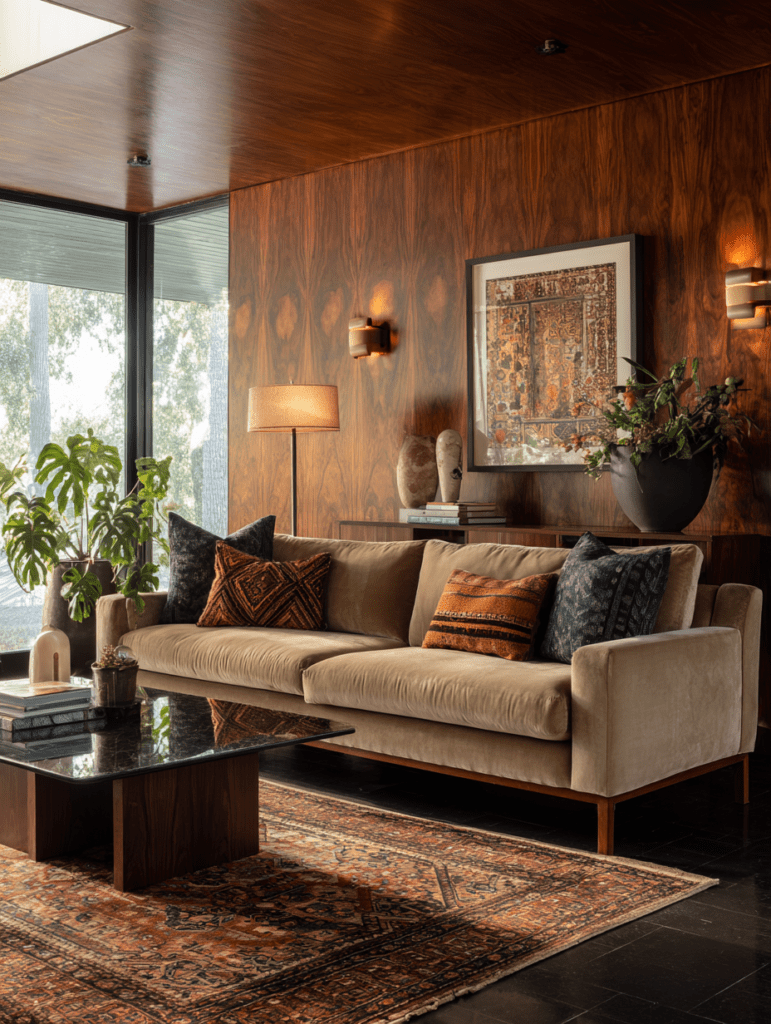
Khaki has a surprising affinity for retro palettes. When paired with walnut furniture, smoked glass, and warm browns, the sofa feels perfectly at home in a 1970s-inspired interior.
Add a sculptural lamp*, a patterned rug, and perhaps a vintage sideboard*, and suddenly the sofa looks stylish rather than neutral.
The Dramatic Khaki Look
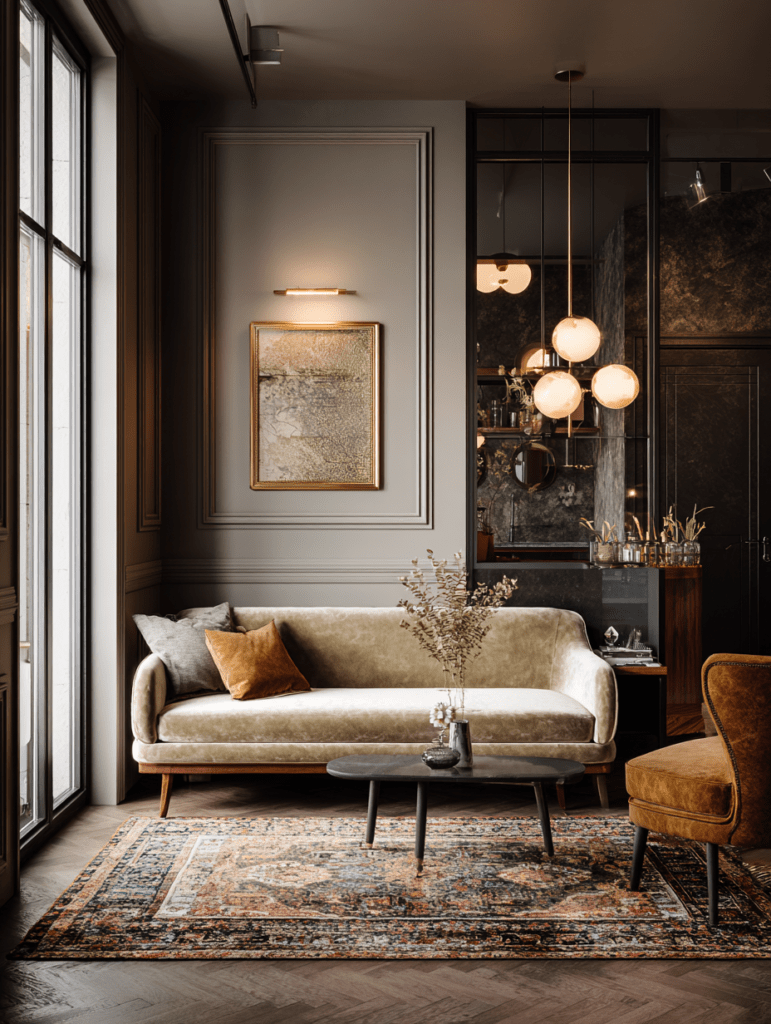
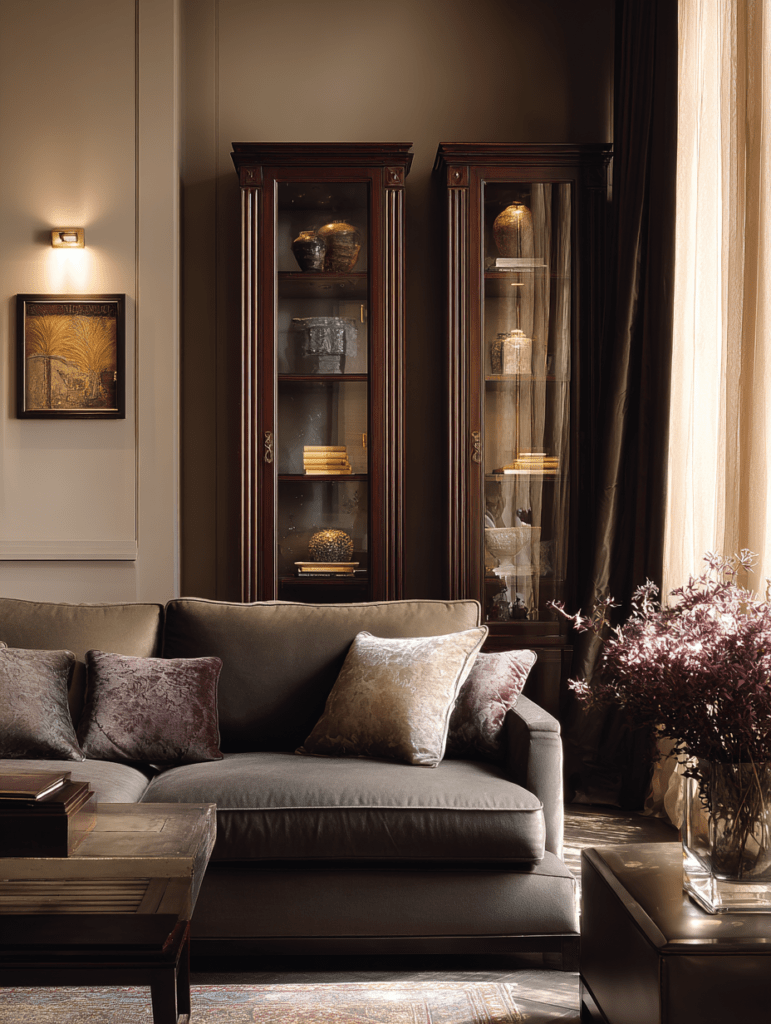
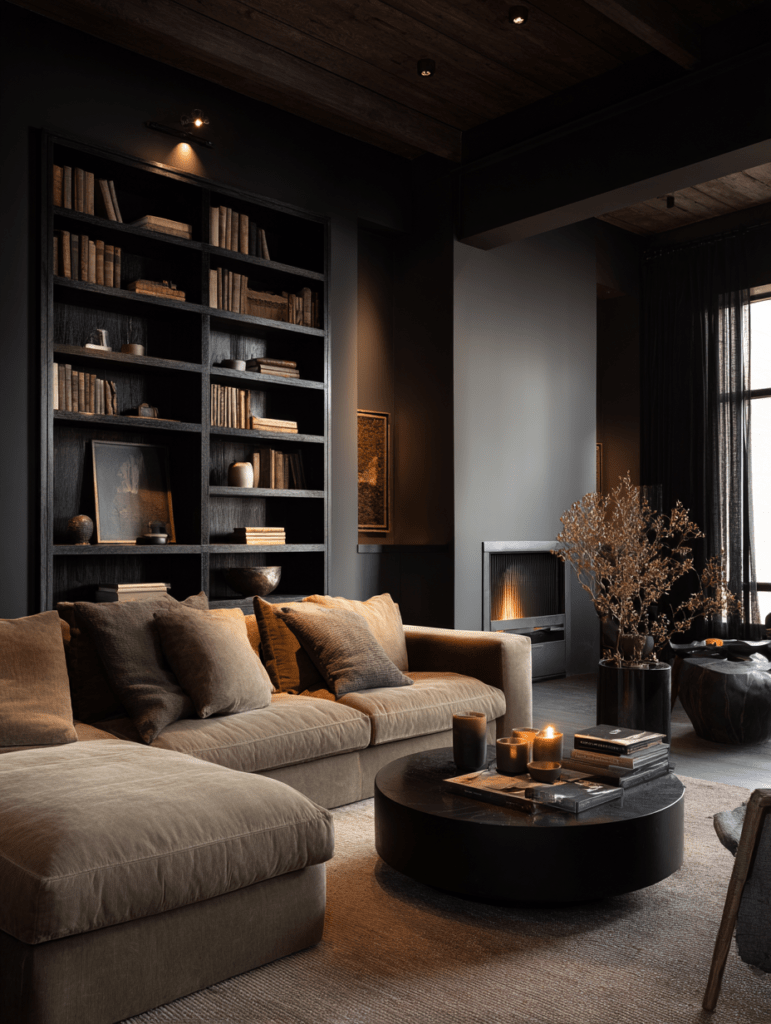
Khaki also performs surprisingly well in darker interiors. Against charcoal walls, black shelving, or deep wood paneling, it becomes a warm counterbalance that softens the entire room.
This approach feels modern and slightly dramatic, especially when combined with sculptural lighting and minimalist décor.

Khaki Meets Color
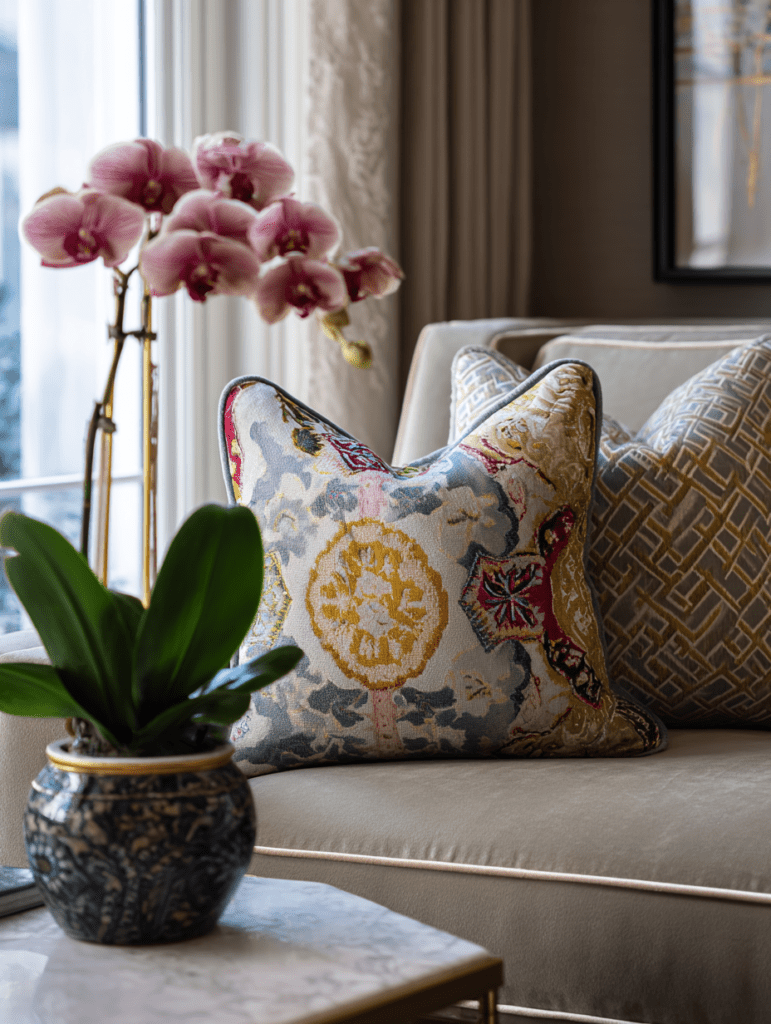
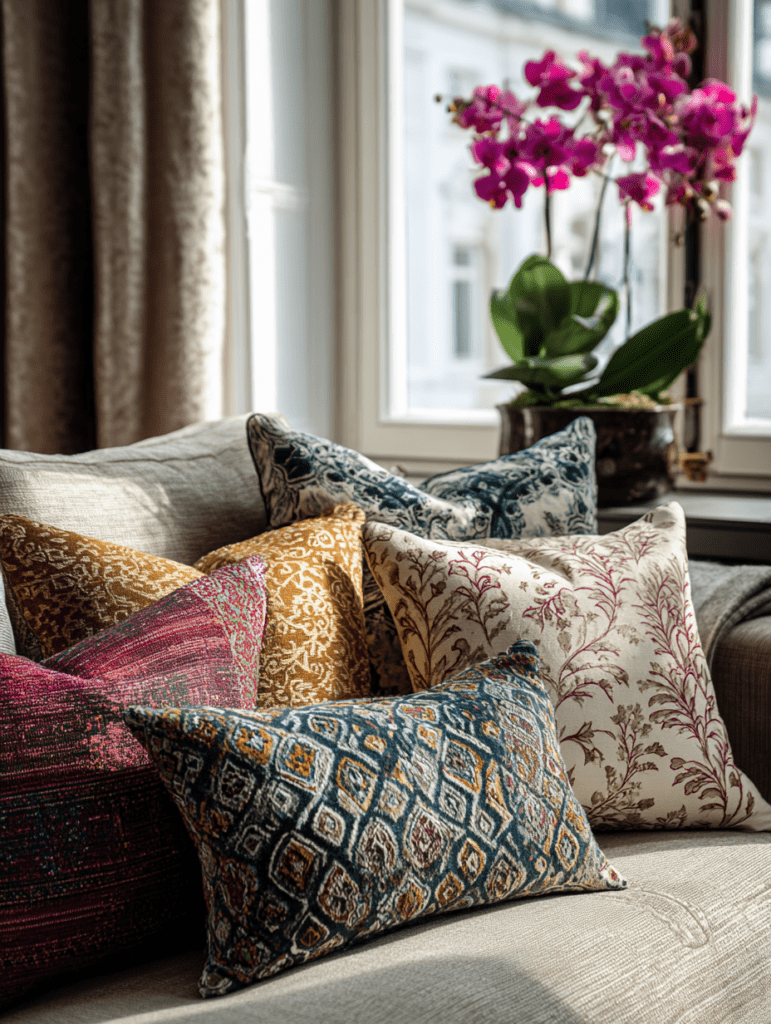
One of the reasons designers love khaki is how effortlessly it handles color. Unlike beige, which can sometimes look washed out next to stronger tones, khaki holds its own.
It creates a calm base while allowing richer accents to stand out beautifully. Think deep burgundy cushions*, a rust-colored throw*, or a dark blue rug. Even mustard, terracotta, or forest green work naturally with the tone.

Why We’re Seeing More Khaki Sofas
Khaki succeeds where many neutrals struggle: it adds depth without demanding attention. It’s understated, but never boring.
For homeowners who love the elegance of neutrals but crave a room that feels warmer and more grounded, khaki may quietly be the perfect middle ground.
Beige will always have its place. But if your living room feels a little too pale, a little too predictable, a khaki sofa might be exactly the shift it needs.