Blue and yellow can easily feel bold. Almost too bold. The contrast is strong, the energy is high, and if done wrong, it can look thematic instead of beautifully balanced.
But when styled the right way, the combination feels fresh and undenieable sophisticated. In this article we’re looking at how to bring blue and yellow into your home in a way that feels natural – never heavy, never forced.
1. Let Blue Lead the Room
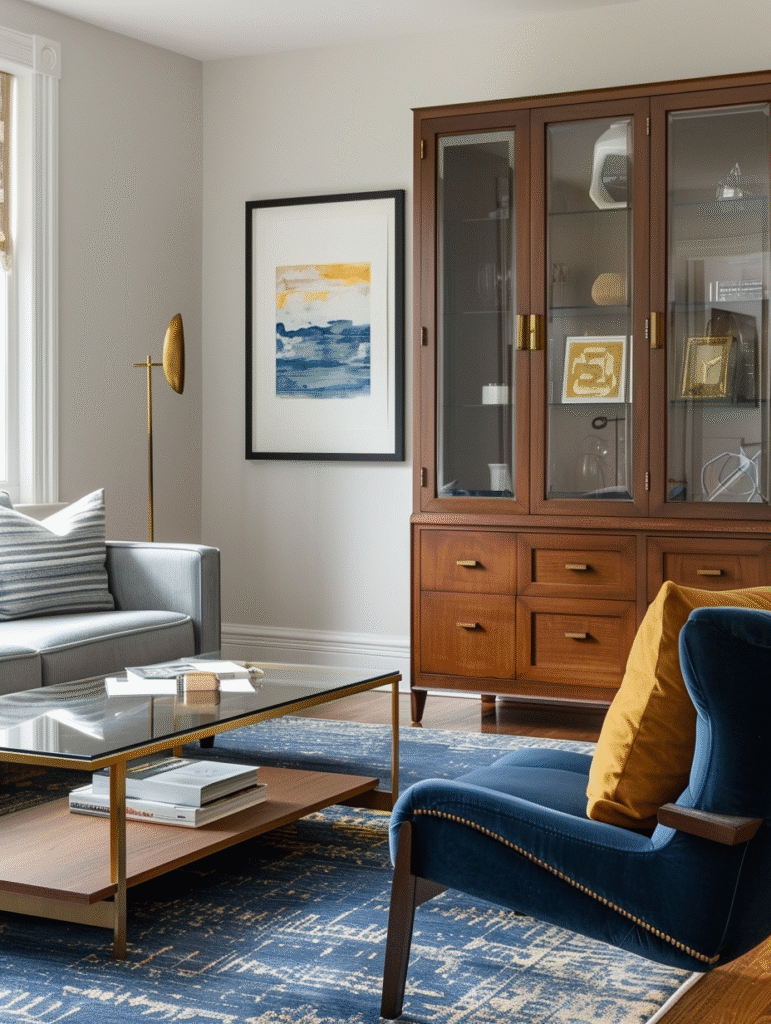
If you’re working with both tones, blue should anchor the space. It naturally feels calmer and visually heavier than yellow, which makes it ideal as a base.
Think dusty blue walls, a soft navy sofa, muted blue cabinetry, or even a textured blue area rug. Blue grounds the room so the yellow doesn’t feel scattered or loud.
A deep blue linen sofa* paired with neutral walls already creates a refined foundation. Add subtle texture, like brushed brass lighting, a beige boucle chair, warm oak flooring, and the space starts to feel well-planned.

2. Use Yellow as a Controlled Accent
Yellow works best in smaller moments. Instead of a yellow wall or large furniture piece, introduce it through accents:
- a patterned rug with subtle yellow detailing
- throw pillows* with soft mustard embroidery
- artwork featuring sunflowers
- abstract art with muted yellow brush strokes
This keeps the energy of yellow without letting it dominate.
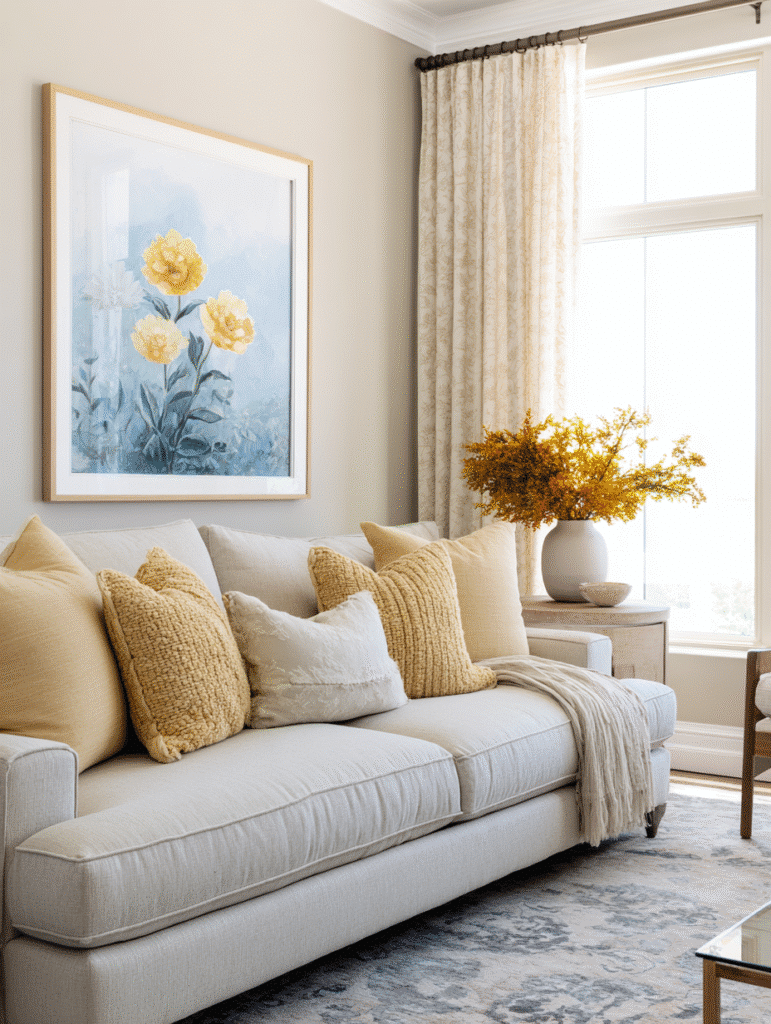
A neutral sofa with two pale yellow textured pillows instantly feels lighter. A rug with woven yellow threads warms up a blue-based room without screaming for attention.
3. Consider Pastel Blue and Pastel Yellow
Not everything has to be bold.
Pastel blue and pastel yellow create a softer feel – think Parisian apartment meets Scandinavian calm.
A pale blue painted cabinet with pastel yellow ceramics* on open shelves feels light, not dramatic. A soft butter-yellow throw over a light blue armchair feels relaxed and lived-in.
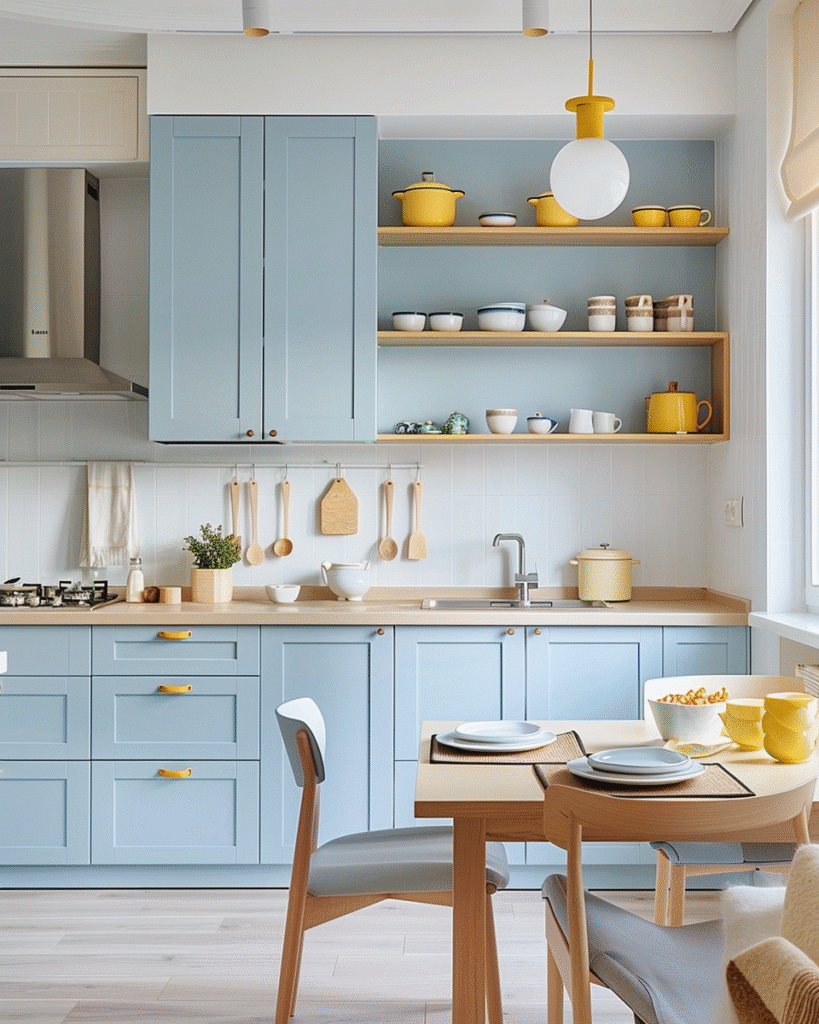
This approach works especially well in kitchens, breakfast nooks, and bedrooms where you want color without intensity.
4. Break It Up with Neutrals
Blue and yellow need breathing space. Too much of both in close proximity can feel busy. Introducing neutrals between them creates rhythm.
Layer in:
- Natural linen curtains
- A jute rug*
- Beige upholstery
- White or off-white walls
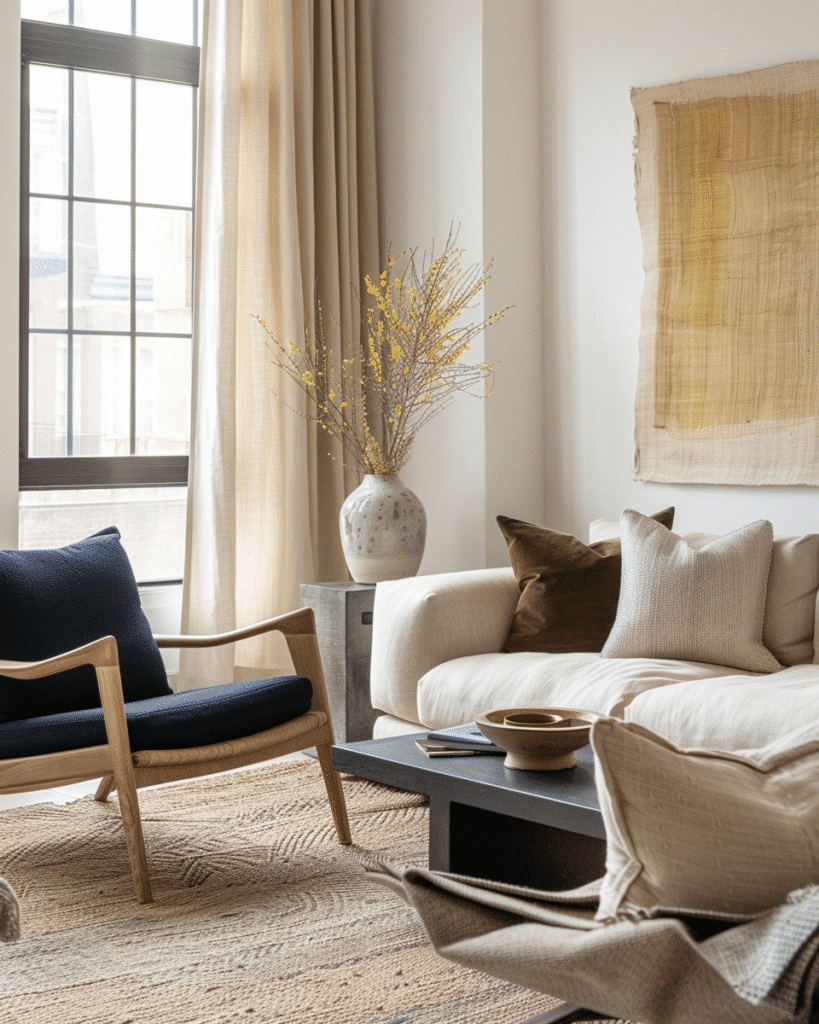
The neutrals soften the contrast and allow each color to stand out without clashing. A navy armchair, beige sofa, jute rug, and subtle yellow artwork above – suddenly the combination feels curated and not color-blocked.
5. Balance Warm and Cool Tones
Blue is cool. Yellow is warm. The harmony happens when you support both sides.
- 👉If you use a cooler blue (like steel or slate), balance it with warmer yellows (mustard, golden tones).
- 👉If your blue leans softer and warmer (dusty blue), keep yellow light and airy (butter, pastel).
- 👉Adding warm wood – walnut, oak, or even rattan – bridges the temperature gap naturally.
A slate blue wall, mustard velvet cushion, walnut coffee table, and warm brass lighting? That’s depth.
Final Thought
Blue and yellow don’t have to feel loud. They just need space.
Let blue settle into the room first. Let yellow show up in smaller moments – in a pillow, in a detail in the rug, in artwork leaning casually against the wall. Not everything has to be bold. Pastel blue and soft butter yellow can feel just as strong, just in a quieter way.